
The Importance of French Drains in Soggy Southern Ontario
Turning Your Backyard Swamp into a Dry Comedy
Living in Southern Ontario, I’ve seen my fair share of soggy lawns and water troubles. It’s like the ground here has a drinking problem! But fear not, fellow waterlogged homeowners, for I’ve discovered a secret weapon in the battle against moisture madness – the mighty French drain.
You might be wondering, “What on earth is a French drain?” Well, it’s not a fancy European shower, that’s for sure. French drains like those installed by JR’s Waterproofing and Structural Repair in Southern Ontario, are shallow trenches filled with gravel and a perforated pipe that redirect water away from problem areas, keeping your property high and dry. Think of it as a waterslide for your yard’s excess moisture. Fun for the water, not so fun for the mosquitoes!
If you’re tired of squishy grass between your toes and a basement that feels more like an indoor pool, a French drain might just be your ticket to drier days. Trust me, your lawn will thank you, your foundation will breathe a sigh of relief, and you’ll finally be able to mow the grass without needing water wings. Say goodbye to soggy lawns and hello to a yard that doesn’t double as a swamp!
Making a Splash with French Drains

I’ve got a secret weapon for battling soggy yards, and it’s not a giant sponge! Let me tell you about the wonders of French drains and how they can turn your waterlogged lawn into a dry paradise.
What’s a French Drain Anyway?
Picture this: a hidden superhero in your yard, fighting off excess water like a champ. That’s a French drain for you! It’s not actually French, and it doesn’t drain baguettes. It’s a shallow trench filled with gravel and a perforated pipe that whisks water away faster than you can say “au revoir, puddles!”
I like to think of it as nature’s water slide. The water hops in, takes a ride, and ends up far from your foundation. It’s like a secret underground waterpark for raindrops!
Soggy Lawns Be Gone: The Benefits
Say goodbye to squish-squash walks across your lawn! With a French drain, I’ve seen miracles happen. No more impromptu ponds or accidental slip ‘n slides.
Here’s what you can look forward to:
- Drier soil that doesn’t feel like a swamp
- Happier plants that aren’t drowning in love (or water)
- A basement that stays dry, no matter how much it rains
French drains are one of the most effective solutions for managing water on properties. They’re like bouncers for your yard, showing excess water the exit before it can crash your home’s foundation party.
And the best part? You’ll never have to explain to guests why they need water wings to cross your lawn again!
Digging Deeper: The Anatomy of a French Drain

Let me tell you about the guts of a French drain. It’s like a secret underground party, and everyone’s invited – well, if you’re water, that is!
Perforated Pipe: The Drain’s Backbone
Picture this: a pipe with more holes than my favourite pair of jeans. That’s our star player, the perforated pipe. It’s the backbone of our drain, ready to slurp up water like I gulp down coffee on a Monday morning.
These pipes aren’t just any old tubes. They’re designed with tiny holes or slots that let water sneak in. It’s like a VIP entrance for H2O molecules. And boy, do they love to party inside!
I always make sure to use high-quality materials for my pipes. No skimping here! The better the pipe, the happier the drain. And a happy drain means dry feet for me.
Gravel: More Than Just Rocks
Now, let’s talk about the unsung hero of our drain – gravel. It’s not just there to look pretty (though I do think it has a certain charm). This rocky crew has a big job to do.
The gravel acts like a bouncer, keeping dirt and debris out while letting water through. It’s like a fancy filter for our underground water club. I like to think of each piece of gravel as a tiny bodyguard for our perforated pipe.
But wait, there’s more! The spaces between the rocks give water a place to hang out before it enters the pipe. It’s like a waiting room, but way cooler. And trust me, proper installation of this gravel is key. I’ve seen drains fail because someone got lazy with their rock placement. Not on my watch!
H2Oh No!: Preventing Water Catastrophes

Water woes can turn your cozy home into a soggy mess faster than you can say “French drain.” Let’s dive into some nifty tricks to keep your castle high and dry.
Keep Your Basement Dry as a Bone
I’ve seen my fair share of flooded basements, and let me tell you, it’s no laughing matter. Basement flooding can wreak havoc on your belongings and wallet. But fear not! I’ve got some tricks up my sleeve to help you stay dry.
First things first, let’s talk gutters. Clean ’em out, folks! Clogged gutters are like an open invitation for water to party in your basement. Trust me, you don’t want that kind of shindig.
Next up, grading. No, I’m not talking about school. Make sure the ground around your house slopes away from the foundation. It’s like giving water a gentle nudge to go play elsewhere.
Lastly, consider a sump pump. It’s like having a tiny superhero in your basement, ready to swoop in and save the day when water tries to crash your pad.
Sidestepping Soil Erosion
Now, let’s chat about keeping your yard from pulling a disappearing act. Soil erosion is no joke, my friends. It’s like Mother Nature’s version of a magic trick, except nothing fun appears at the end.
Plant those roots! Trees, shrubs, and grass are nature’s Velcro, holding your soil in place. Plus, they make your yard look pretty snazzy.
I’m a big fan of retaining walls. They’re like bouncers for your soil, telling it, “You shall not pass!” Trust me, they’re worth every penny.
Don’t forget about mulch! It’s not just for looks. This stuff is like a cozy blanket for your soil, protecting it from the elements. And who doesn’t love a good blanket?
The Down and Dirty: Installing Your Drain
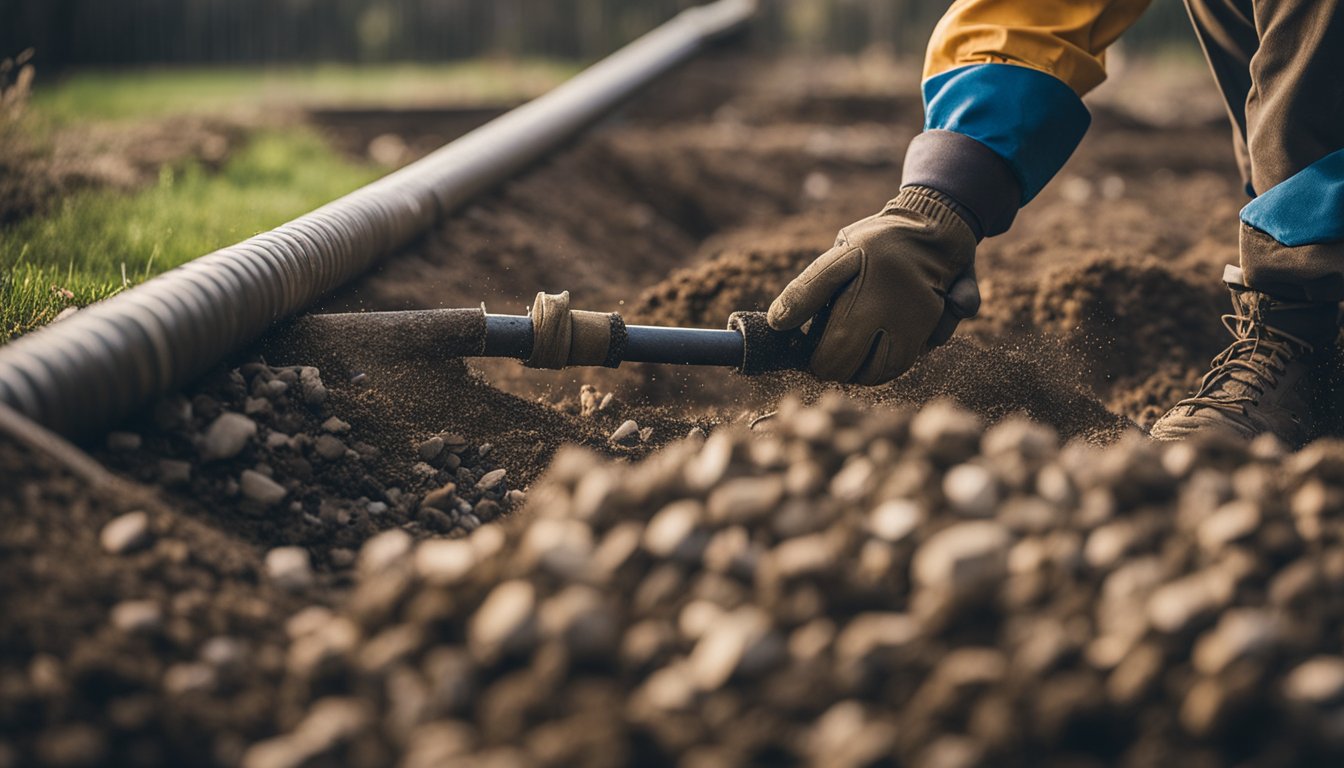
Ready to get your hands muddy? Let’s dive into the nitty-gritty of French drain installation. I’ll walk you through picking the perfect spot and deciding if you’re up for a DIY adventure or need to call in the pros.
Location, Location, Elevation
I can’t stress this enough – where you put your French drain is key! I always start by looking for the lowest spots in my yard. That’s where water loves to hang out and throw pool parties.
Proper installation is all about working with gravity. I make sure the trench slopes away from my house at least 1 inch for every 8 feet. No uphill battles here!
Soil conditions matter too. I’ve learned the hard way that clay soil needs a steeper slope. It’s like trying to drain a bathtub full of pudding!
Laying the Groundwork: DIY or Call the Pros?
Feeling handy? DIY might be your jam. I’ve tackled a few drain projects myself, and let me tell you, it’s a workout! You’ll need to dig a trench, lay gravel, and position the pipe just right.
But if you’re dealing with tricky landscaping or complex water management, calling in the cavalry might be smart. Pros have the tools and know-how to handle tough jobs.
Remember, a botched DIY job could lead to more water woes. Sometimes it’s worth shelling out the cash to get it done right the first time. Trust me, your future self will thank you!
After the Storm: Maintenance and Upkeep

Whew! That was some rainfall, wasn’t it? Now that the storm has passed, it’s time to show our trusty French drain some love. Trust me, a little TLC goes a long way in keeping these drainage superheroes in top shape.
First things first, let’s take a stroll around the yard. I’m on the lookout for any debris that might have hitched a ride with the rainwater. Leaves, twigs, and even the occasional lost sock can clog up our drain faster than you can say “waterlogged lawn.”
Next up, I’m checking the drain’s inlet grates. These little guys are the gatekeepers of our drainage system. If they’re clear, we’re golden. If not, it’s time for a quick clean-up party.
Here’s a fun fact: Did you know that a well-maintained French drain can handle up to 1.5 inches of rainfall per hour? That’s like emptying a bathtub every 60 minutes!
Now, let’s talk erosion. I’m keeping an eye out for any signs of soil washing away around the drain. If I spot any, I’ll add some rocks or plants to hold that dirt in place. It’s like giving the earth a little hug.
Lastly, I’m making sure the water’s flowing where it should. If it’s backing up, we might have a blockage deeper in the system. Time to break out the snake or call in the pros!
Remember, a happy French drain means a dry, happy yard. So let’s raise a glass (of rainwater, of course) to good maintenance!
Frequently Asked Questions

Got questions about French drains? I’ve got answers! Let’s dive into some common queries about these water-wrangling wonders that keep our yards from turning into swamps.
Why do we even call it a French drain, did it come from France with a beret?
Nope, no beret involved! The name comes from Henry French, a judge and farmer from Massachusetts. He wrote about this drainage system in 1859. I guess you could say he drained the competition with his idea!
Does installing a French drain around my abode make a splash in preventing a soggy fortress?
You bet it does! A French drain is like a moat in reverse. Instead of keeping water in, it guides water away from your home. It’s like having a tiny river that works for you, keeping your castle high and dry.
What’s the secret recipe for concocting a French drain? Asking for a friend.
The recipe is simple, but don’t eat it! You’ll need a trench, some gravel, and a perforated pipe. Mix them together in your yard, and voila! You’ve got yourself a French drain. It’s like cooking, but instead of feeding people, you’re feeding excess water to the ground far away from your home.
Can a French drain keep up its charm during a torrential downpour, or does it throw in the towel?
A well-designed French drain is like a marathon runner – it keeps going even when the going gets tough. During heavy rain, it works overtime to channel water away from your property. It might not wear a raincoat, but it sure knows how to handle a downpour!
If my yard turned into a swamp, will a French drain turn it back into a lawn or is it time for a lily pad?
While I can’t promise miracles, a French drain can be a real yard-saver. It’s like a magic wand for soggy lawns, helping to dry out waterlogged areas. You might not need those lily pads after all! But remember, if your yard has turned into Shrek’s home, you might need more than just a drain.
Planning a treasure hunt for water – will a French drain help solve the mystery of disappearing groundwater?
Absolutely! A French drain is like a secret agent for water management. It infiltrates your yard, collects excess water, and whisks it away to a more suitable location. It’s not exactly X marks the spot, but it definitely helps solve the case of the waterlogged yard!

